How an Aspirational/Aspiring Polyglot Mastered Mandarin
The Host
Guru Ramanathan
Hello and welcome to Found In Translation. I'm your host Guru Ramanathan and this is a podcast where we talk to people who are first, second gen, or immigrants about their relationship with their cultural language and how that has influenced their relationship to their culture, family, friends, and more.
This week’s guest is Jared Patel, a Puerto Rican-Indian who discusses his connection to Spanish and Gujarati, why he dedicated himself to learning Mandarin and immersing himself in Chinese culture, his experience studying abroad in China, and how this unique language journey has affected his familial relationships and personal identity. Hope you enjoy!
Yeah, if you want to just begin talking a little bit more about what your connection was with, let's maybe just begin with Spanish and Gujarati in your childhood and how that kind of played out when you were growing up in a house of mixed cultures?
The Guest
Jared Patel
When I was much younger, my mom actually tried to speak almost exclusively Spanish with me at home. I was as fluent as a little kid under the age of 10 can get,right? And, I got pretty comfortable with the language for a long time. And then, I went to elementary school and it was an interesting situation because where I grew up it wasn't extremely culturally diverse.
So, when my mom was the only one speaking to me in Spanish, I started to feel uncomfortable. And as a kid, that's when you wanna step back. You wanna fit in. And, one of my biggest regrets to this day is, one day I said to my mom, please don't talk to me like that, when she was talking to me in Spanish.None of my friends talked to their parents like that. I feel odd, I feel weird, I feel left out. And so, ultimately, at that point I pulled away from learning Spanish as a child, and ended up losing all of that fluency I had built up to that point.
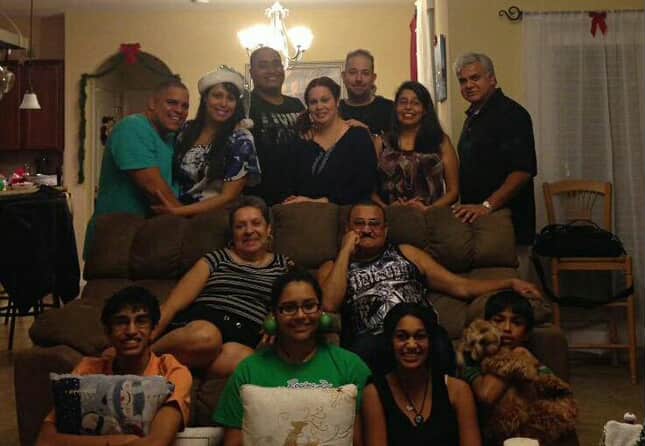
On the Gujarati side, my dad actually never spoke growing up. It was much to the chagrin of my grandparents. Definitely. They speak pretty often at home, but he basically had the fluency of a eighth grader, I would say. He could talk, communicate all the time, but never really taught me and my siblings actually. My grandparents almost exclusively speak it at home.Jared's family photos
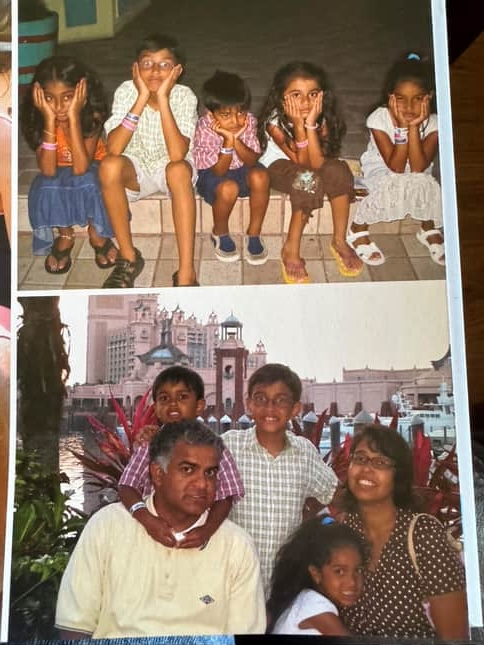
Not much English. Just even the act of communicating with my grandparents, understanding what was going on. It was a lot of handholding and leaning on other members of the family to try to just get by and understand. Which, at the end of the day, it's not totally uncommon, I feel like, for a lot of people who grew up as like second, third gen. But, definitely something that I want to get to a point where I'm improving upon.
And how did that impact your, to stay on the Indian side for a second, since you weren't being spoken the language or getting immersed in that side of the culture, like how did that then impact your relationship with your other relatives? Did you at points feel closer to your mom's relatives and your dad's relatives, or, even at school, did you feel more affinity with Spanish-speaking kids than Indian kids?
And that changed as I got older, you know. Town started to get a lot more people of color, a lot more immigrants, a lot more people who spoke different types of languages. When I was younger at least it wasn't really there.
And so, I didn't even find myself really identifying with a Puerto Rican or an Indian.Jared's family photo
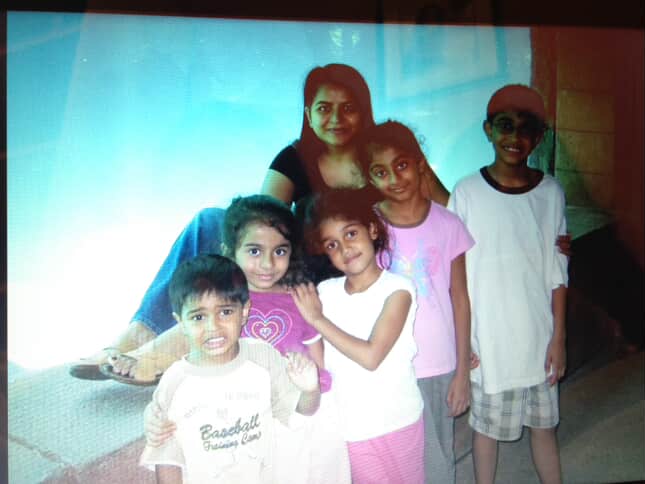
And the only proximity I got to that was more or less my family. And, I felt that affinity for my family, I felt that affinity for my family's culture. But, it was different. It wasn't, it didn't feel as natural as I think maybe someone who grew up in and around the culture might have felt.
So, I went through this when I was like, I wanna say like middle school. Yeah. Mainly in middle school, a little bit of high school, where my parents had sent me to an Indian school to learn more about Tamil culture, and also the Tamil language. And there were kids from different languages all there. So, obviously you hadn't done that for Gujarati, but was there anything like that for Spanish, or did you hear about the few people of color in your school, did you hear about them going to a Spanish school, an Indian school, or a Chinese, Korean school?
Actually, I hadn't really heard of that until I left my town. It wasn't something that I had seen really predominantly. The neighbors had gone to a Korean school. But, it wasn't something that I had heard of for Spanish, or even the Indian or Asian languages until much later on in life.
Honestly, if I had known at the time, I might've been interested to do it. But, I also have to think back to my bullheadedness as a kid and not willing to really spend as much time with the language as I probably should have.
Yeah. What about in middle school, high school? What language did you take at school?
Yeah, so it's funny. In middle school, they sit us all down the first day and basically ask what language do you wanna learn?
Spanish, French, Latin. And then the last option which they added the year I went to middle school was Chinese. And, Chinese to me was something so foreign, but incredibly interesting. I had loved Chinese culture growing up. I loved Chinese food. I loved the old myths and legends.
Reading about the Jade Emperor and the journey to the west, it was like a really cool culture, a really cool history there. And so, I thought that learning Chinese would be awesome. I heard that it would be the hardest one. And of course, being a kid who wanted to stand out, on the brighter side, I was like, yes, this is the hardest one.
This is gonna be super interesting. I like the culture, I like the idea. Let me take Chinese.
My mom was horrified that I didn't wanna take Spanish. My dad couldn't care less. But, it was definitely an interesting step. I ended up taking Chinese through middle school and high school.And then ended up continuing a little bit in college, but pulled back just due to credit load towards the end.
And so, when you're learning Chinese, is it just Mandarin or are they giving you like, some foundation in Mandarin and Cantonese? Because I feel like when people hear Chinese, they might just assume it's one version of the language. But, could you explain more about like the differences, or what specifically you were learning?
Yeah. Chinese has a few few different dialects. Cantonese is one that you mentioned. Mandarin is what I would consider the main dialect throughout China.
That's the official language of the culture. Or the country, not the culture. That's the one that I ended up learning. And then, within Mandarin itself, there are a whole bunch of different sub-dialects. Every different city or province has its own version of the language. Some are closer to that main core dialect than others, but ultimately it's like learning a different language sometimes. In terms of the actual writing itself even is built into two different categories.
There's the traditional characters, which originated from the original pictographs that people derived the characters from initially. And then, there's the simplified characters, which were adopted by the island of Taiwan. And then, later the the main government in China, just to simplify the way that we write things out.
Much much simpler in terms of stroke number. Shapes. Some of them have actually lost the initial meaning because they're just so much far simplified from what the structure used to be.
And so, I feel like one of the common conceptions of Chinese is it's so difficult to learn it since it's a pretty intricate language and every character means its own thing. What was your thought process like with grasping the characters and what else was drawing you to wanting to master that? Or, was it something that kind of came to you like easily or did you like the challenge of it?
I would say it's a little bit of both.
Chinese was interesting in that there's really no standard phonetic alphabet. They use characters to represent different words and meanings, and each character can be said a whole bunch of different ways. But, ultimately as I learned what each character represented, how the sentences were built, it's a lot more logical than you would've expected.Not to say it was easy to learn by any means. It's extremely challenging. But, it was definitely something that, once you understood the building blocks, you could start to pick together how things work. For example, the character for tree is just tree. But, you put two trees together, you have woods. You put three trees together, you have a forest.
So, it makes sense how they build out from certain characters.
Jared with a sign in Chinese
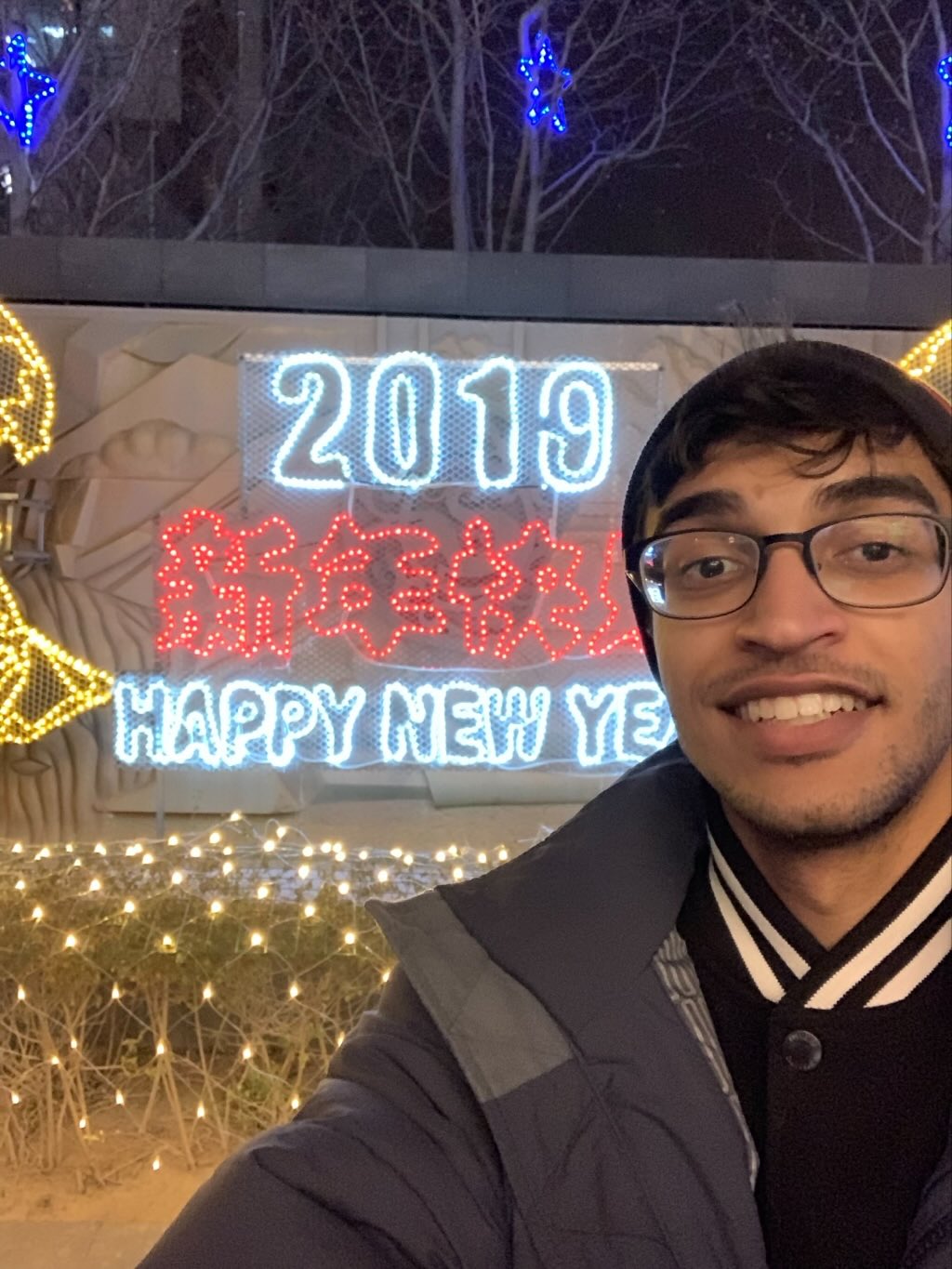
Going back to what your mom had said, like she was horrified of you wanting to I guess not do Spanish essentially. Did you need to convince her further or was it just, I'm a stubborn teenager, I'm just gonna do this?
Yeah, I think that part of it was, after, after, initially going into Chinese in middle school, she had resigned herself to the fact that I was not going to be as in tune with the language, at least in near term.
That said, she did have my siblings, who both are fluent.
They didn't quite have that same experience when they were younger, pulling away from the language, which has always been interesting for me. Just because, when they wanted to have a conversation, maybe didn't want me to be involved, they might throw in some Spanish. Or, they might just do it to annoy me or agitate me just because they know it's an easy way to keep me left out. And, I think that part probably contributed a little bit to me wanting to learn the language as I grew up. But also, I just felt that the connection to the culture, it would've been so much deeper if I hadn't known the language a lot earlier.Jared's family photo
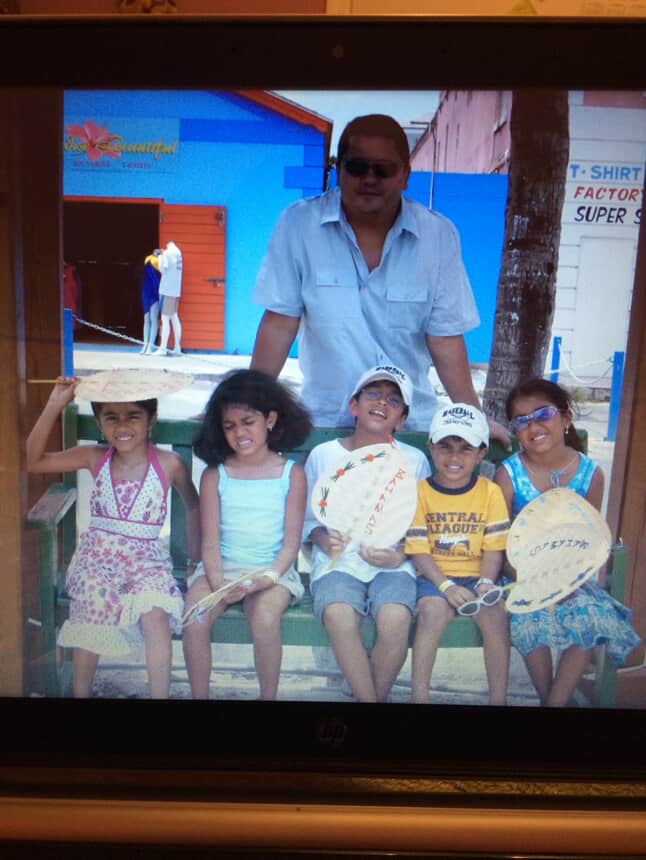
And so, I've spent a lot of time now trying to get trying to get back to the fluency that I once had, which has taken longer than I would expect.
Yeah. Can you just talk about what that's been like to, not learn a language from scratch, but since you were having this touch and go relationship with it, what's it been like jumping back into it and is it, is your process Duolingo, is it just practicing with your siblings or, how are you trying to get that fluency again?
It's a great question. At the end of the day, I probably subscribe more to the language immersion method. I watch movies in Spanish or TV shows in Spanish, and I'll pull up a, English based TV show, put on subtitles in English, and then play the audio in Spanish. Or, I'll watch something like Elite.
I don't know if you've ever seen it, but I watch that in the original language with English subtitles. And I try as much as I can to spend time just listening to the language, listening to audio books in the language, even if I'm not completely understanding them.
But, if it's a book I've already read, maybe I can catch some things, maybe I can learn a little bit as time goes on. In terms of how easy it's been, it definitely, I would say it's been much harder. I feel like when I was learning Chinese, which was generally at the time recognized as a much harder language to learn, I was pretty much soaking it up like a sponge. I was understanding the way everything fit together. Like things just made sense.
In a way that Spanish, and now as I'm trying to learn Gujarati as well, have just not fit into for me. But, I also started learning those so much later on that I do wonder that had it been 10, 15 years ago, and I was trying to learn these languages, would it have been significantly easier?Did you ever talk to your dad explicitly about why he didn't care about you learning Gujarati? Or, is it, was it just like always this unspoken thing of just yeah, I don't care, and like you just grew up with that as a normal family setting?
Yeah, it I feel like it was unspoken.
My siblings don't speak it either. Ultimately, I think it's something that, we've never explicitly spoken about this, but I think it's just something that he thought we wouldn't need at the end of the day.
Because, we weren't constantly in environments where that would be something that we're using all the time.
Jared's family photo
Did you ever, when you were going more into learning Chinese and immersing yourself like in that like culture how did that affect your... I guess what I'm trying to ask is as you were prioritizing one language over the other, did that affect the sort of knowledge and pride or yeah, pride essentially, that you would have towards a specific part of your identity, or was it were you at any point kind of feeling like assimilating into the Chinese culture or identity in some way?
No, I mean I think ultimately, yeah, I definitely felt, as I interacted with the language, and I think this also is what contributed to me wanting to learn more Gujarati and Spanish as I grew up.
The more I interacted with the Chinese language, the more I took these classes, even going to China my sophomore year of college and spending six months out there, I did feel a close affinity to the culture, to the environment. I learned about the different holidays, the different celebrations, amazing types of food. And yeah, some of that I had gotten growing up on both the Spanish and the Indian side, but there was a certain affinity that I do think I had just because I knew the language. I understood what was being spoken about around me. I understood the different aspects of cooking.
Jared in China

Like even in Chinese, there's a whole bunch of different flavors that you can communicate in the language. Two different types of spiciness. There's numbing spice and then there's like savory spice. And then there's two different words for that. And, just understanding which region that food comes from versus the numbing spice versus where you get the sweet food or the savory food.
And, understanding that like now I can go to any restaurant anywhere, know exactly what type of cuisine they're serving, and say, this is exactly what I'm going to expect. Versus when it comes to like Indian food or Spanish food, I know the dishes. I know generally you know what each type of dish is gonna be.
But, I don't know the different regional specialties. I don't know what's best from where. I don't know whether a dosa from South India is gonna be as good as a dosa from North India. But, ultimately, as I've spent more time with the culture, I think on both sides, it has gone a little bit beyond just understanding the language.
It's gone to the point where I feel like just for pure affinity to my family, pure affinity to, to the celebrations and holidays that we had growing up, it would be just so much more helpful to understand a little bit more and have a greater appreciation for it.
Because, not to say that I didn't growing up, but being able to really understand all of the nuances of what's going on I think would be a phenomenal thing. Great example, I just came back from, from a wedding this past week. And Indian wedding. Beautiful four day celebration.
Again, it's like like you're sitting through some of these ceremonies. You're sitting through a blessing and you're not understanding anything that's going on. You know what each thing is generally supposed to symbolize, but if you understand the language, you understand everything that's being said, it adds so much more of a greater appreciation for me.Jared's family photo
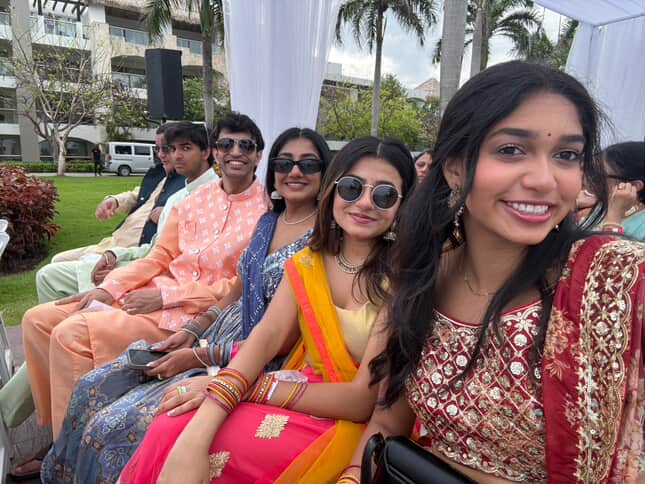
And now, my girlfriend's Indian, my parents are elated. But, like I think that it's also, just so you know, if it ever gets to that point where we're in a situation like that, I would want to be able to appreciate that just to the most capacity I could.
When something about your, let's say Puerto Rican or like Gujarati culture goes mainstream, was that something that also moved the needle for you of oh, this is something that fills me with pride, or I wanna feel more proud of this? So, I would like to go back and learn the language or immerse myself more in the culture?
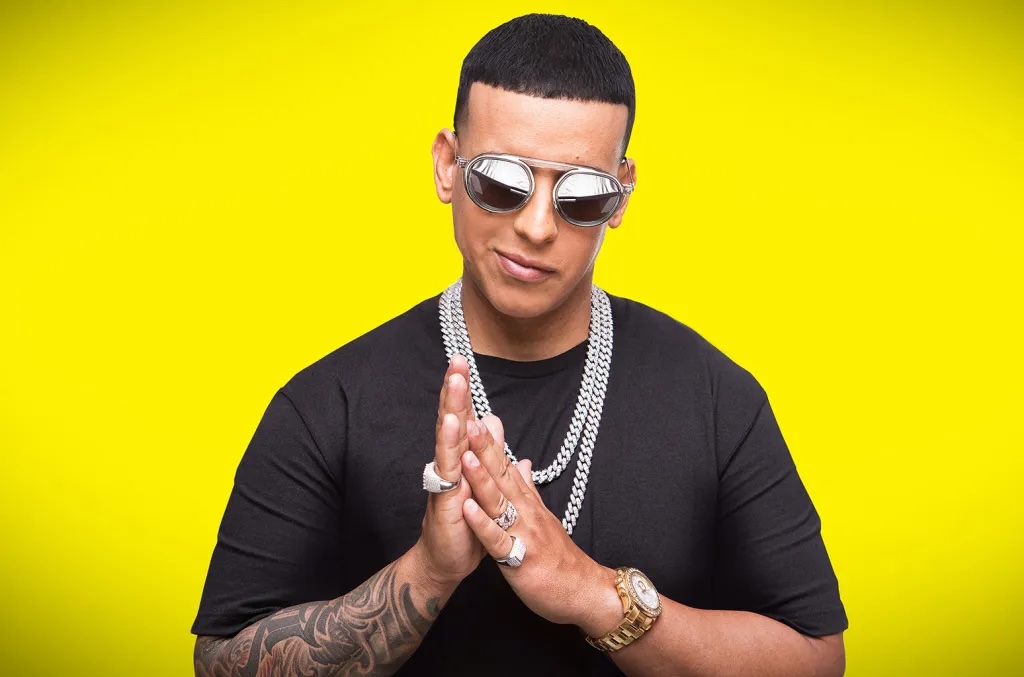
Yeah, I would definitely say I did feel more prideful about, my, my own, ethnic culture. Having grown up with Daddy Yankee, Donald Mar on the Spanish music side.
Seeing those guys pop off and, the states as well. That's been really cool. And, I felt a tremendous amount of pride for, for, those things.
I feel pride in my understanding of the language, but I don't feel the same sort of pride that I do when, say an Indian movie I watched during my childhood, like a Bollywood movie I watched during my childhood, becoming more popular here in the States. So, I do think it's a little bit of a double-edged sword too, right?Daddy Yankee
Because there are some things that I'll see and then I'll feel a little bit of disappointment in my culture, too, right? Controversial take, but I absolutely hated Hamilton and I am not a fan of Lin-Manuel Miranda. Puerto Rican, has done a great job bringing notoriety to the culture, but I actually, I didn't feel pride in that.
So, it was the, it was a little bit of the opposite in that case.
Hamilton

So, actually no I agree with what you're saying. So, you're in a safe space here. And maybe the internet will just come to hate us. But, yeah, I was very late to Hamilton, I guess is what I'll say. I didn't really like jump on the train when it first opened.
Yeah. Honestly, I'm no theater expert. But, that's okay. That's okay. Jumping back into, I guess the languages of it all, Alejandra did mention something in the chat, which I wanted to ask you more as like a fun question. But, when you are going to karaoke, is it going to be a Spanish song, Gujarati song, or a Chinese song?
If we're excluding English, I think my go-to would be Spanish. Growing up, my grandfather used to play music all the time.
He also, he was a big fan of the classics, so it was a little bit of a mix. I got Elton John growing up, I got all of the old American songs that became classics in their own right. But, then we also got a lot of, I don't know if I would call, I guess I could call it just island music, that he played when he was younger that he had from his childhood, that my mom had from her childhood.
Jared's family photo
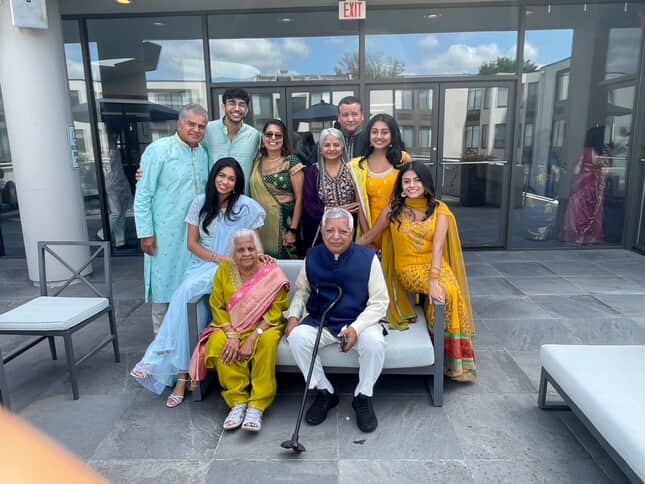
And those songs, they remind me so much of growing up, the barbecues that we used to have, the family playing dominoes around the table, all the good food we used to eat. And yeah, I love to listen to those songs and sing those songs.
And, ironically, I can't understand what they mean, but I can, I can speak 'em pretty well. When it comes to karaoke I might call myself fluent in Spanish.
Do you notice you having any subtle or significant personality shifts when you're speaking in any of these different languages?
It's actually, it's interesting. I don't know. It's actually something that's been brought up to me before, but I haven't personally noticed. For instance, when I, even when I speak English with my mom, I've been told that I adopt a slight accent on top of the way I normally speak. And, you know that, that said I don't know if I've personally noticed a sort of shift. But, the languages themselves do have tonalities that make them feel different coming out.
When I speak English, I feel like it's a lot more rigid, structural, a little bit eloquent. Ale is saying my Chinese sounds a little sassy. But, it's definitely, it's a little bit more of a, like a fluid language where the tonality is so important.So that delivery changes the way you speak about things. And so, I can totally understand that. I know hearing other people speak different languages, I've heard changes in tone, changes in personality that I personally haven't noticed within myself, but it's also hard to identify those.
I grew up in New York. I don't have a New York accent most of the time, but if I'm at a baseball game and I'm screaming, sometimes it'll slip out. It's not like I ever tried to learn or lose that accent. It's just an aspect of my surroundings and I adopted it without even knowing it.
Have you been to each Puerto Rico, Gujarat, and China, have you been to all three of these locations?
Yeah, I haven't been to PR or Gujarat yet. I'm hoping to go at some point in the near future to both. But, China, I actually have been to. So I spent, I spent six months at a summer abroad program. Three months in the summer abroad program. Three months really traveling around the country in China.
So, I went with, I went with my father around Chinese New Year to China. We left over the holidays, spent a couple months just traveling around from Beijing to Xian, where they had the terracotta warriors. We went to a whole bunch of different regions in the country that were amazing to see.
Jared's family photo

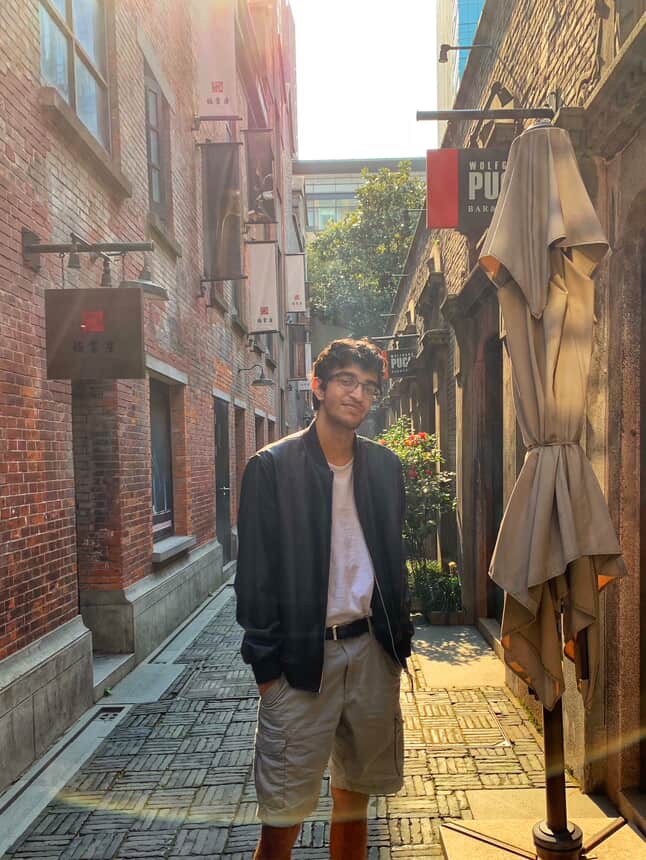
And then, I did my semester abroad in Shanghai. And that's actually where I ended up meeting Ale. And it was also my opportunity, I would say, to really get into understanding the culture in a way that I didn't before. I had talked about the immersion process in learning Spanish.
I think that was one of the most helpful parts of learning Chinese as well. When I was learning it in school, yeah, I learned the characters. I learned how to speak, but comfort with the language I think trumped everything when I was abroad. My first week or two in China, I was very uncomfortable with communicating, even though I could understand what people were saying to me, just because I didn't, I didn't feel like I had the level of proficiency I needed.
Jared and his friends in Shanghai
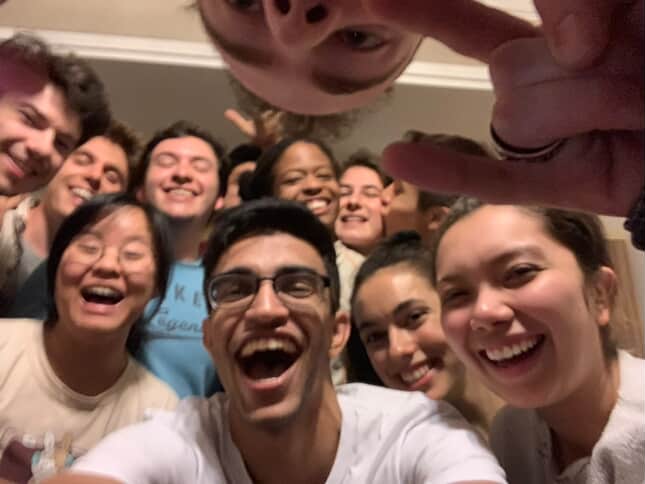
I think a great example is I did a couple of trips around the country with other members, with other classmates, and ultimately ended up being the most proficient in Chinese. And, I would handle things like navigating things, like talking to locals, ordering at restaurants, in a way that, I, if it was the first week or two there, even though I had, I would say a pretty similar level of proficiency, I don't know if I would've been comfortable enough to do.
Jared in China
Cool. And, second to last question. Since you're already a mixed race person, and then you have this third sort of language on top of that that you're well-versed in I'm just curious, as you've gone throughout life, how have you navigated those kinds of conversations about people having certain, or I, maybe I should frame it phrase like this. Have you had to face those kind of conversations about people having certain expectations about your knowledge and your knowledge, connection, mastery of like certain languages, or certain connections to the respective cultures. Is that something you've had to encounter? And I guess what if, so what are those like situations like, or how do you like deal with them now?
When it comes to Spanish, there's a whole term for this. It's called a No Sabo Kid. They don't understand, basically. And I guess it's something that, for there to be a term about it, something that a lot of first and second gens have to have experience.
A lot of the time I'll find myself, not just with Spanish, but be it Spanish, someone will come up to me. Try speaking the language, realize I don't, and then you can tell, even though they won't say anything, maybe out of politeness, maybe out of disrespect, or whatever.
Jared's family photo
You can tell there's disappointment in their eyes. And so, it's interesting to see that. And then on the other side of that, when I've been in New York and I've had a Chinese tourist come up to me, try to communicate with me in English, switch to Chinese. Thinking I don't speak the language, and then I'll be able to help them.
And then on the other side of that, you see that and be able to say, okay, that's actually really cool. They weren't expecting this, I was able to help them. And, that's super fulfilling.
So, it's a little bit of a catch 22 in that, where you don't know and the expectations are there, you really want to know. I don't think anyone wants to feel like they're being disappointing. They're unable to deliver on something that someone expects of them. But, at the same time, I don't think that it's something that I'll ever be able to totally grapple with. Because, at the end of the day, I'm not sure I'll ever reach the level of proficiency that people expect from me.And, I think that's okay. Honestly, it's just a matter of, for me, a matter of being able to engage with the culture as closely as possible. Engage with the language as closely as possible, whether that's fluency, pseudo-fluency, or even intermediate level speaking.
Okay. Amazing. And then, yeah, the last question we always like to end on is do you have a favorite word? I guess, in this case, do you have a favorite word in Spanish, Gujarati, and Chinese?
Oh, that's a great question. Okay. Let me think about this for a second. I don't think I'm allowed to say most of my favorite words.
Yeah, this is you can say whatever want on this podcast,
But, in Spanish, actually, my favorite word growing up was pencil sharpener, just because the way it rolled off the tongue. Sacapunta.
I, my my brother used to say that all the time. And, he would use it as a, he would use it as a kind of a jab. He's you're as bright as a pencil sharpener. In Chinese, honestly it's probably one of the foods, maybe xiaolongbao, the soup dumplings.
Just every time I think about that, my mouth waters. And then I, honestly, I couldn't pin one down for Gujarati.
Okay. No, that's totally fine. But yeah. Thank you so much Jared for coming on to the podcast. Is there anything else you wanted to share or plug?
No. Thank you so much for having me.
Really happy to join and share my experiences.
Okay, awesome. Thank you.